
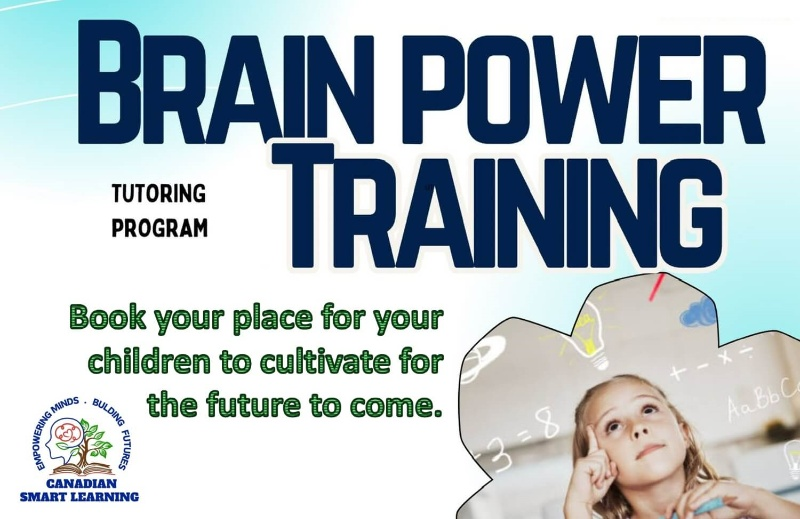





Human intelligence is more important than ever in the AI era

"Brain Power" should be defined broadly, beyond traditional academic skills

Holistic "Brain Power" training is essential for children to thrive in the future


As AI reshapes careers and automates tasks, human intelligence becomes more critical than ever.
Our key advantage is maximizing cognitive skills like critical thinking, which AI lacks, through holistic education.

Critical Thinking & Complex Problem Solving
Our brain can navigating ambiguous situations, defining novel problems, and integrating diverse perspectives.

Creativity & Innovation
Wth Brain Power Training, it would be easy to generating original ideas, artistic expression, and unconventional solutions.

Ethical Reasoning & Judgment
Making value-based decisions, understanding context, and navigating moral dilemmas, all need a sharp mind.

Emotional & Social Intelligence
Our founder, Dr. Ada Cheng always saying if there is no high IQ, how would good EQ appears, to understanding nuanced emotions, building trust, navigating complex social dynamics, and providing empathetic leadership needs a good Brain Power shaping.

Adaptability & Resilience
Life is full with uncertainty and struggles, as parents we can’t always be assured to accompany our children, but we can pass down a bright Brain Power ability to children for them to continuously learning new skills, pivoting strategies, and thriving amidst uncertainty, helping them to face challenges of their times.
Linguistic
Linguistic intelligence is the ability to understand and use spoken and written language effectively.
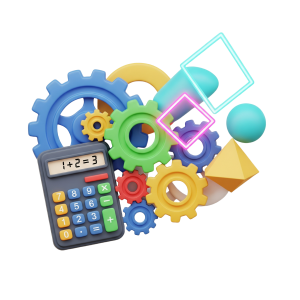
Logical-Mathematical
Capacity for deductive reasoning, problem-solving, and abstract pattern recognition.
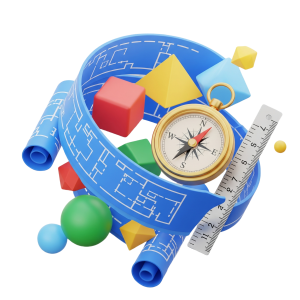
Spatial
Ability to visualize and manipulate spatial relationships (e.g., artists, architects, surgeons).
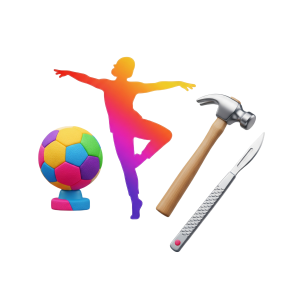
Bodily-Kinesthetic
Expertise in using one's body for expression or problem-solving (e.g., dancers, athletes, surgeons, craftspeople).
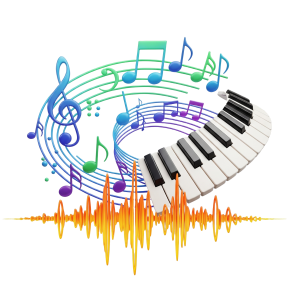
Musical
Musical intelligence involves sensitivity to and appreciation for rhythm, pitch, and timbre, as well as musical expression.
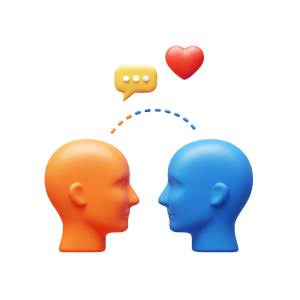
Interpersonal
Capacity to understand others' intentions, motivations, and desires; effective social interaction.
Intrapersonal
The ability to understand others' feelings and motivations for effective social interaction.

Naturalist
Ability to recognize, categorize, and draw upon features of the natural environment (e.g., biologists, conservationists, chefs).